Keto, Fasting, Fiber, CGM, and Everything In Between. My Personal Science Fair
The Diets That Shaped Me
1/6/2026
The Diets That Shaped Me: A Journey Toward Finding What Truly Nourishes
My Lifetime Subscription to Dieting
If you’re trying to solve the riddle of what diet is “right” for you — welcome. You’re in good company. Food has always been one of the most confusing topics for me. If nutrition experts can’t agree whether tomatoes are good or not, what hope do the rest of us have?
For most of my life, food felt like something I had to manage and figure out, even outsmart. I spent decades trying to lose the same 10–20 pounds, always believing that the next diet, the next reset would finally be the one that made everything fall into place. Then I would be happy. Then I would buy the jeans, the coat, the wardrobe I was saving for my “real” body.
My main pursuit was always weight — losing it or managing it. That was always the goal. But as I got older, and as my health began whispering (and then shouting) for attention, I began to realize that there is no single perfect diet. There is only the way of eating that supports who you are right now — your biology, your history, your genetics, your metabolic health, and the season of life you’re in. This is the story of how I came to that conclusion, one experiment at a time.
From Dieting to Nourishing: A Shift in Perspective
For years, my mindset was simple: lose weight, fix the symptom, get the result, fit into the clothes, and then relax and eat whatever I wanted. But eventually, as a few health issues piled up, I began asking a different question: What do I want to be made of?
Around 2020, my fasting glucose started creeping up. At every physical, the number nudged higher. The advice was always the same: “Work on your diet and exercise, and we’ll keep an eye on it.” The irony was that I thought I had been doing that all my life.
Then came COVID, and with it, a new phrase entered my vocabulary: metabolic syndrome. I began following functional medicine doctors online, reading books on metabolic health, and learning everything I could. Suddenly, my lifelong “food stuff” wasn’t just about weight anymore. It was about inflammation, pain, energy, sleep, longevity, and the future version of myself I wanted to become.
I learned that food is not just calories. It’s information. It shapes your cells, determines your energy, influences inflammation, mood, and resilience, and affects which genes stay quiet and which ones wake up — the essence of epigenetics. Once I understood that, everything changed. Food stopped being an enemy I had to control and became an ally I could partner with. Instead of asking what I should cut out, I began asking what I could add that would help me thrive — and maybe lose weight in the process. That shift from restriction to nourishment became the foundation of everything that followed.
The Diets I Tried (A.K.A. My Personal Science Fair)
The Gluten-Free, Dairy-Free, Sugar-Free, Seed-Oil-Free Era
This was my first major shift, and it was life-changing. My knee pain eased, my back pain improved, the bloating and puffiness disappeared, my energy lifted, and I lost 15 pounds without trying. The biggest miracle was that my decades-long eczema vanished and forgot to say goodbye. My first Christmas without eczema was in 2021. It felt so good I wanted to tell everyone — friends, family, strangers in the grocery store. This was my first real experience of food as medicine.
The High-Fiber, Eat-the-Rainbow Phase
Inspired, I doubled down on plants, colors, textures, and variety. My fridge looked like a botanical garden. I sprinkled seeds on everything, ate massive salads, and treated fiber like a mission. My digestion, skin, and mood loved it. I learned how invigorated I feel when my plate is mostly filled with greens, vegetables, beans, nuts, and seeds. I learned how much my digestion thrives on fiber, how powerful and delicious plants can be when they’re not an afterthought, and how herbs, fruits, and vegetables from farmers’ markets taste completely different from supermarket ones. This was my introduction to gut health and anti-inflammatory eating.
Intermittent Fasting
I tried everything: skipping breakfast, skipping dinner, 18:6, 20:4, 36-hour fasts, a 48-hour fast once (for science and to prove to myself that I could), OMAD, sardine challenges, and eating early Sunday dinner and waiting until Tuesday morning to have breakfast. I was chasing ketones and autophagy like a hobby.
I learned that I can go long periods without food now that I’ve trained myself. I’m no longer “hangry,” my cravings disappeared, and my energy stabilized. But long fasts stressed my body, and my glucose stayed oddly high. Great lessons, mixed results, and maybe not ideal for women’s hormone health.
Keto and Therapeutic Keto
Ah yes — the ketone-meter era. I measured glucose and ketones like a lab technician. Most days I was in light nutritional ketosis, sometimes medium or even high therapeutic ketosis. I ate very few carbs — mostly leafy greens, lemons, and a few berries. During this phase, I learned the importance of mineral-rich salt like Celtic or Himalayan, which became staples.
Keto made me feel focused, clear, steady, and less inflamed (my hs-CRP dropped to 1.2). But then my cholesterol climbed too high, and keto and I had to break up. We’re still on speaking terms, but we don’t see each other often.
Counting Calories
Not glamorous, but incredibly educational. I learned that what I thought was 1,200 calories… wasn’t. Snacks add up. Restaurant food is a math problem with no correct answer. I discovered volume eating and fell in love with roasted zucchini, cabbage, and pumpkin — foods that feel abundant without adding too many calories. It was a useful tool and a great reality check, even if it wasn’t a lifestyle for me.
Wearing a CGM
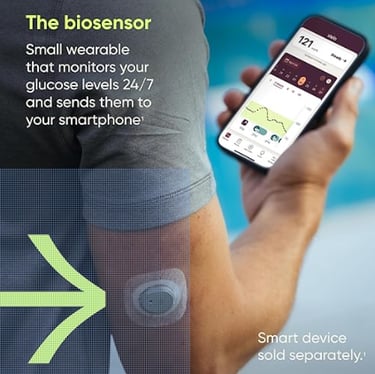
This was one of the most transformative experiments of all. My fasting glucose had been creeping up for years, and almost every woman in my family developed Type II diabetes in their 60s. When over-the-counter CGMs launched in 2024, I got one immediately.
My average glucose started around 110–115. After a few months, I brought it down to 95. I learned which foods spiked me, which kept me stable, and that “healthy” foods aren’t always healthy for me. I learned that marketing is misleading (goodbye oatmeal and buckwheat), that portions matter, and that the order in which you eat matters — fiber first, protein second, carbs last. I learned that a short walk or a few air squats after a meal can lower glucose significantly, and that my body is not the same as anyone else’s. I eventually tightened my personal range to 70–110 and got my blood sugar under control. I highly recommend this experiment. It’s painless, inexpensive, and surprisingly fun.
Where I Am Now: A More Grounded Way of Eating
After years of experimenting, learning, and unlearning, I’ve settled into an approach that feels balanced, sustainable, and respectful of my body. I feel better when I eat on a schedule — three meals a day, no snacks — because my digestion loves the predictability. I eat mostly at home because I want to know what’s in my food. Restaurants are for socializing, not nourishment, and when I do eat out, I choose the simplest, cleanest protein available.
I prioritize whole, clean ingredients. If the ingredient list is longer than a haiku, I’m out. I use Yuka and Bobby Approved to make shopping easier. I avoid seed oils, gluten, and most dairy — my non-negotiables — because I do not miss my eczema and I know it’s lurking in the shadows waiting to come back.
I keep things simple: I start every meal with a salad, prep vegetables ahead, keep canned fish on hand, make big batches of protein, cook one soup per week, keep fermented veggies stocked, sprinkle nuts and seeds on everything, and rely heavily on my Instant Pot and one-sheet-pan recipes. I drink water away from meals because it supports digestion. I practice gentle intermittent fasting — 12–13 hours overnight — enough to rest, not enough to stress. I’m “keto-leaning,” focusing on high protein, healthy fats, and lower carbs, choosing complex carbs like squashes, berries, apples, and root vegetables.
My “No-Decision-Fatigue” Plate Formula
Ideally, every plate includes: something colorful, something sour or fermented, something bitter, a rich fiber source, leafy greens, a detoxifier from the cruciferous or allium family, an omega-3 source, a healthy fat, a protein, and good mineral-rich salt. This removes 99% of the mental load. I don’t ask “What should I eat?” I simply assemble the pieces.
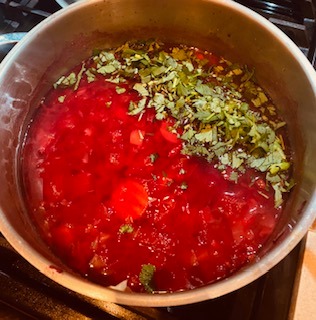
This is my favorite Ginger Pumpkin Soup recipe that combines everything I love and is very easy to make. It has a very few simple, anti-Inflammatory ingredients, It looks stunning and you can serve it to your family or at fancy dinner party.
The Mindset Shift That Changed Everything
At some point, I stopped eating for weight loss and started eating for my future self — the one who wants to move freely, think clearly, age gracefully, and live fully. Eating well stopped feeling like restriction. It became an act of respect.
I realized that your body is always communicating, that symptoms are not inconveniences but information, and that food is one of the most powerful tools you have to respond. Epigenetics taught me that your choices matter more than your genes. If you want to try gluten-free, dairy-free, sugar-free, or anything else, don’t say, “Poor me, everyone else gets croissants.” Say, “I’m doing this for my future self — the one without eczema, pain, inflammation, or fatigue.”
The Big Lesson: There Is No Perfect Diet
In the last five years, I’ve tried high protein, low protein, high fat, low fat, high fiber, low carb, keto, plant-heavy eating, fasting, counting calories, CGM-guided eating, and many more approaches. Every single one taught me something. The same diet will affect you differently at different times in your life. Your body changes. Your needs change. Your diet should change too.
There is no universal “correct” way to eat. There is only the way that works for you — your biology, your history, your goals, your season of life. Every diet I tried gave me insight, new skills, better enteroception, and a deeper appreciation of my body.
A Ritual of Presence
One of the most meaningful changes I made was slowing down before meals. I take five deep breaths. I use plates I love and a placemat. I pause for a moment to acknowledge what this food will do for me. It turns eating into a ritual — not a task. It reminds me that nourishment is physical, emotional, mental, and beautiful. It transforms eating into an act of self-respect.
Who This Article Is For
I wasn’t always a believer in gluten being harmful. I dismissed it for years — I didn’t have celiac, so why avoid it? Then knee pain entered my life. A physical therapist who I went to see for it, asked what I had eaten for breakfast. “Half a bagel and coffee,” I said. She looked at me with genuine surprise. That moment planted a seed.
Years later, desperate for relief, I finally tried going gluten-free. It changed my life. The fog lifted. The pain disappeared. And a long list of symptoms I didn’t even realize were symptoms vanished. She was my first teacher. I hope this article becomes that for someone else.
Final Thoughts: Be Curious. Be Brave. Be Your Own Hero.
You have the ability to shape your health, one meal at a time. No doctor, coach, or expert can do this for you. You have a choice. You have agency. You have a body that wants to heal if you give it the right conditions.
Try things. Experiment. Learn. Adjust. Repeat. Listen — your body is always speaking.
Being sick is hard. Changing habits is hard. Going gluten-free in a gluten-filled world is hard. Lifting heavy weights is hard. HIIT workouts are hard. But aging poorly is harder. Taking medications for chronic conditions is harder.
Choose your hard. Choose your future. Choose yourself.
You deserve to feel good in your body. You deserve energy, clarity, strength, and joy. And food can help you get there.
Thought leaders in the space of health and wellness, my teachers who I follow, read and greatly admire:
Mark Hyman M.D.
Casey Means, M.D.
Terry Wahls, M.D.
Peter Attia, M.D.
Gabrielle Lyon, D.O.
Dr. Natasha Campbell-McBride
Dr. Rhonda Patric
Andrew Huberman, Ph.D.
Robert H. Lustig, M.D., MSL
Jason Fung, M.D.
William Davis, M.D.
And many more ...
Favorite Items
When you buy through our links, it costs you nothing extra but helps keep this blog alive.
Stelo Glucose Biosensor & App by Dexcom - A Leader in Continuous Glucose Monitoring (CGM). 24/7 Tracking
Wheat Belly 30-Minute (Or Less!) Cookbook: 200 Quick and Simple Recipes to Lose the Wheat, Lose the Weight, and Find Your Path Back to Health
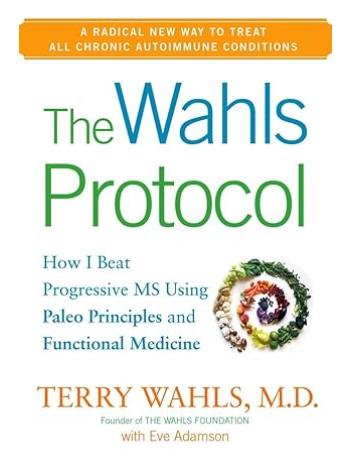
The Wahls Protocol: How I Beat Progressive MS Using Paleo Principles and Functional Medicine
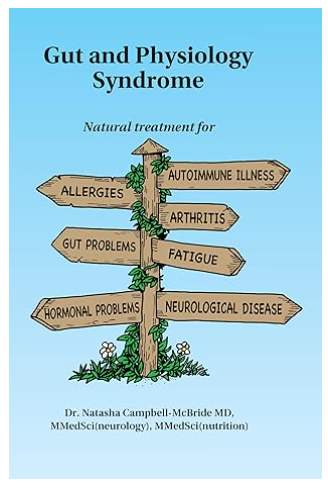
Gut and Physiology Syndrome: Natural Treatment for Allergies, Autoimmune Illness, Arthritis, Gut Problems, Fatigue, Hormonal Problems, Neurological Disease and More
Tasty Recipes
Handpicked dishes to inspire you


